


My Role: Product Designer
My Role: Product Designer
Collaboration: Product, Engineering, and Clinical Operations
Collaboration: Product, Engineering, and Clinical Operations
Domain: B2C/B2C | Digital Health | Health Engagement Platform
Domain: B2C/B2C | Digital Health | Health Engagement Platform
Scale: 40 Million+ Active Members
Scale: 40 Million+ Active Members
Sydney Health
Sydney Health
Elevance Health, Inc.
Scaling Strategic Access in Digital Transformation
Scaling Strategic Access in Digital Transformation
Leading the UX evolution for a Fortune 20 healthcare platform serving 40 million members.
Leading the UX evolution for a Fortune 20 healthcare platform, enabling 40M members to access care efficiently.
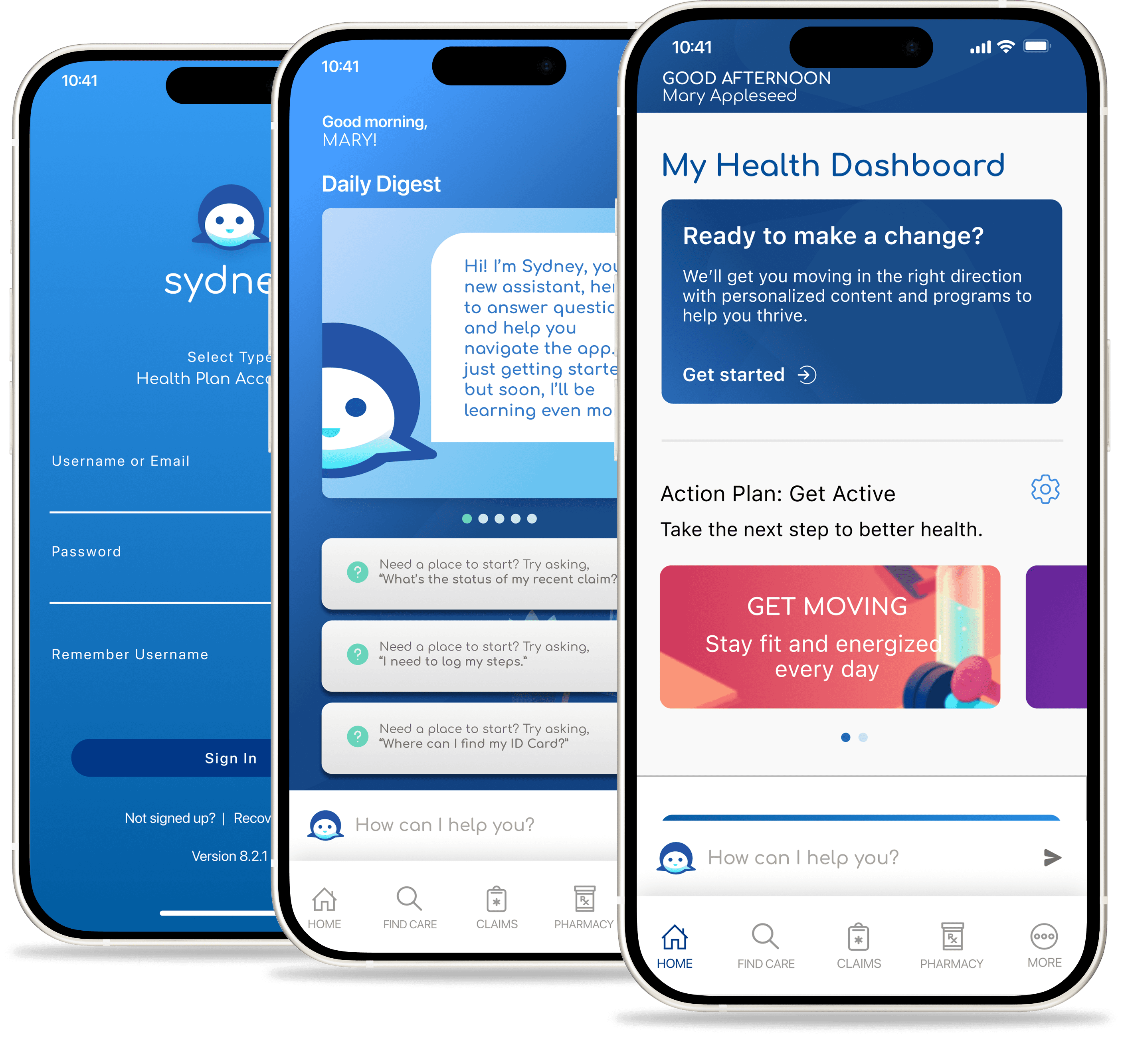
My Role: Product Designer
Collaboration: Product, Engineering, and Clinical Operations
Domain: B2C/B2C | Digital Health | Health Engagement Platform
Scale: 40 Million+ Active Members
Sydney Health
Elevance Health, Inc.
Scaling Strategic Access in Digital Transformation
Leading the UX evolution for a Fortune 20 healthcare platform serving 40 million members.
Context
Context
As tele-health use increased, Sydney Health was technically ready, but the user experience lagged. Entry points were buried and pre-visit steps were confusing, so many members gave up halfway. This created extra work for call centers and increased operational costs. My role was to make a highly regulated, HIPAA-compliant process feel simple, clear, and trustworthy. I focused on removing unnecessary steps and guiding members through the path to care. The goal was to reduce abandonment and make the app a tool members could rely on when they needed help quickly.
As tele-health use increased, Sydney Health was technically ready, but the user experience lagged. Entry points were buried and pre-visit steps were confusing, so many members gave up halfway. This created extra work for call centers and increased operational costs. My role was to make a highly regulated, HIPAA-compliant process feel simple, clear, and trustworthy. I focused on removing unnecessary steps and guiding members through the path to care. The goal was to reduce abandonment and make the app a tool members could rely on when they needed help quickly.
As tele-health use increased, Sydney Health was technically ready, but the user experience lagged. Entry points were buried and pre-visit steps were confusing, so many members gave up halfway. This created extra work for call centers and increased operational costs. My role was to make a highly regulated, HIPAA-compliant process feel simple, clear, and trustworthy. I focused on removing unnecessary steps and guiding members through the path to care. The goal was to reduce abandonment and make the app a tool members could rely on when they needed help quickly.
Challenge & Problem
Members struggled to locate tele-health entry points, understand coverage, and prepare for visits. Core workflows, such as finding a provider, confirming visit details, and starting a call, were fragmented and slow. First-time users felt overwhelmed while returning users wanted speed and reliability. These gaps increased frustration and reliance on support. I was brought in to uncover why adoption lagged and translate user pain points into actionable design improvements. Research was constrained by HIPAA and privacy rules, limiting analytics access and requiring careful handling of sensitive data. The challenge was to simplify workflows, increase user confidence, and maintain compliance without sacrificing performance.
Members struggled to locate tele-health entry points, understand coverage, and prepare for visits. Core workflows, such as finding a provider, confirming visit details, and starting a call, were fragmented and slow. First-time users felt overwhelmed while returning users wanted speed and reliability. These gaps increased frustration and reliance on support. I was brought in to uncover why adoption lagged and translate user pain points into actionable design improvements. Research was constrained by HIPAA and privacy rules, limiting analytics access and requiring careful handling of sensitive data. The challenge was to simplify workflows, increase user confidence, and maintain compliance without sacrificing performance.
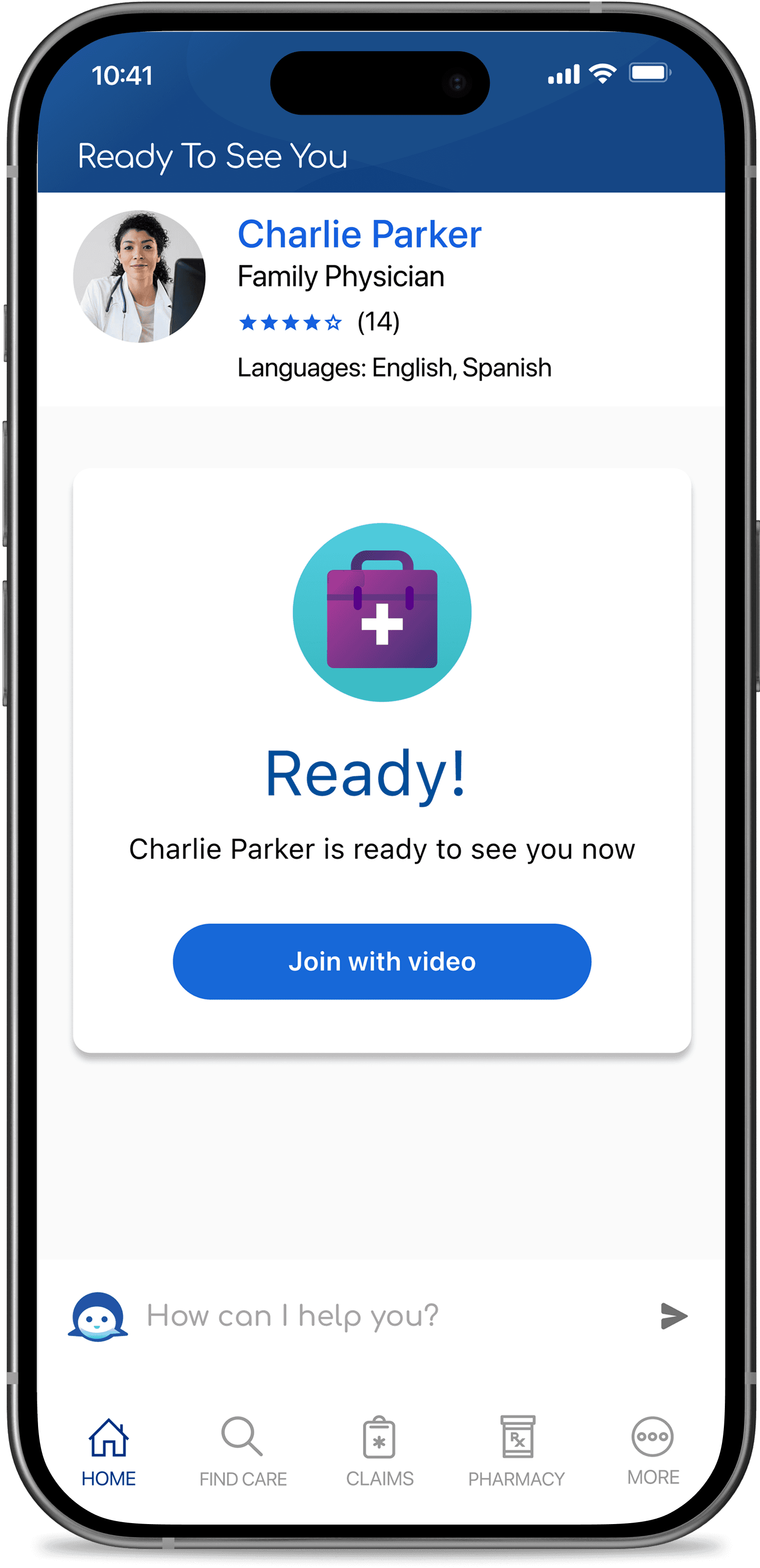
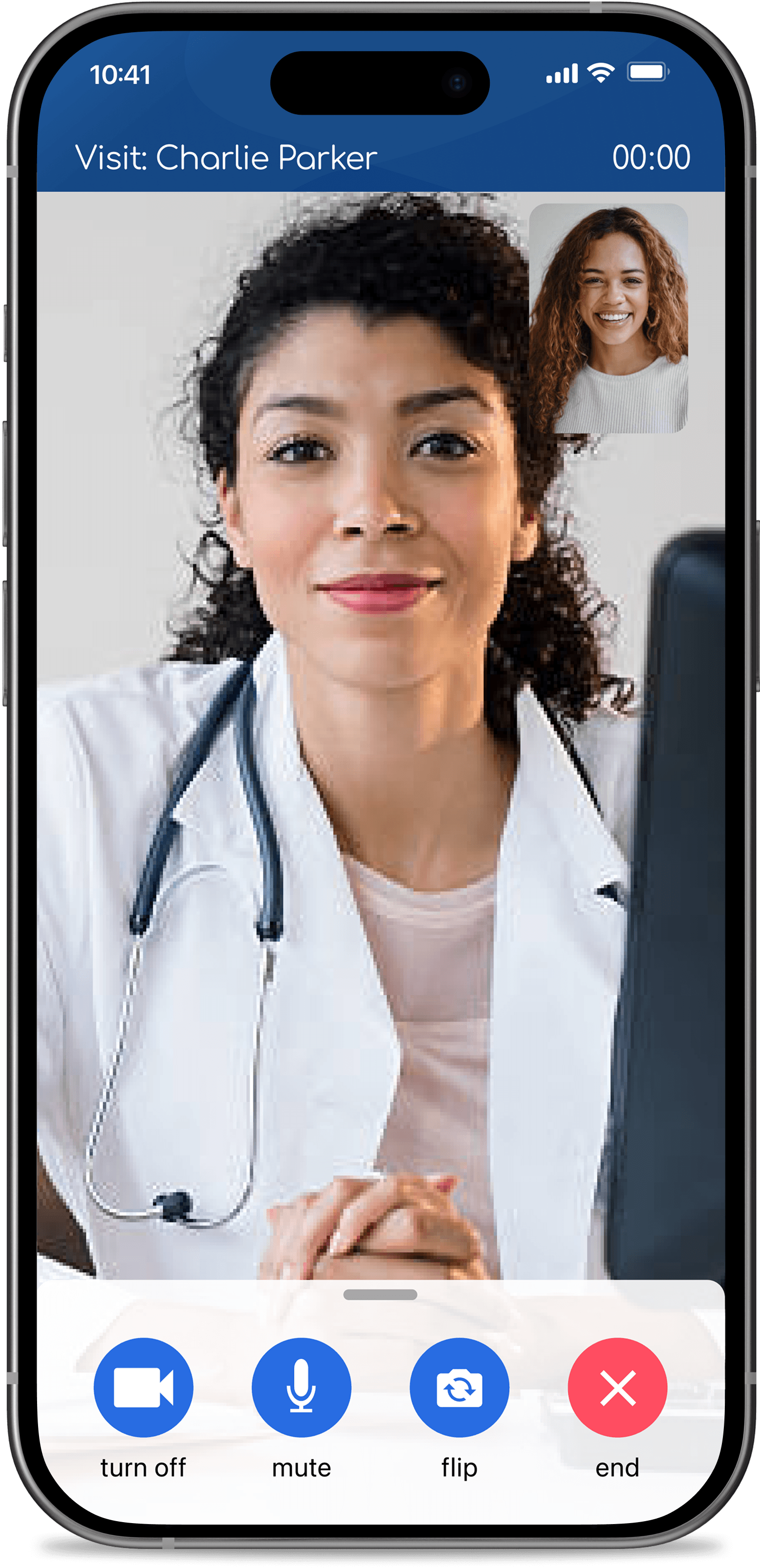
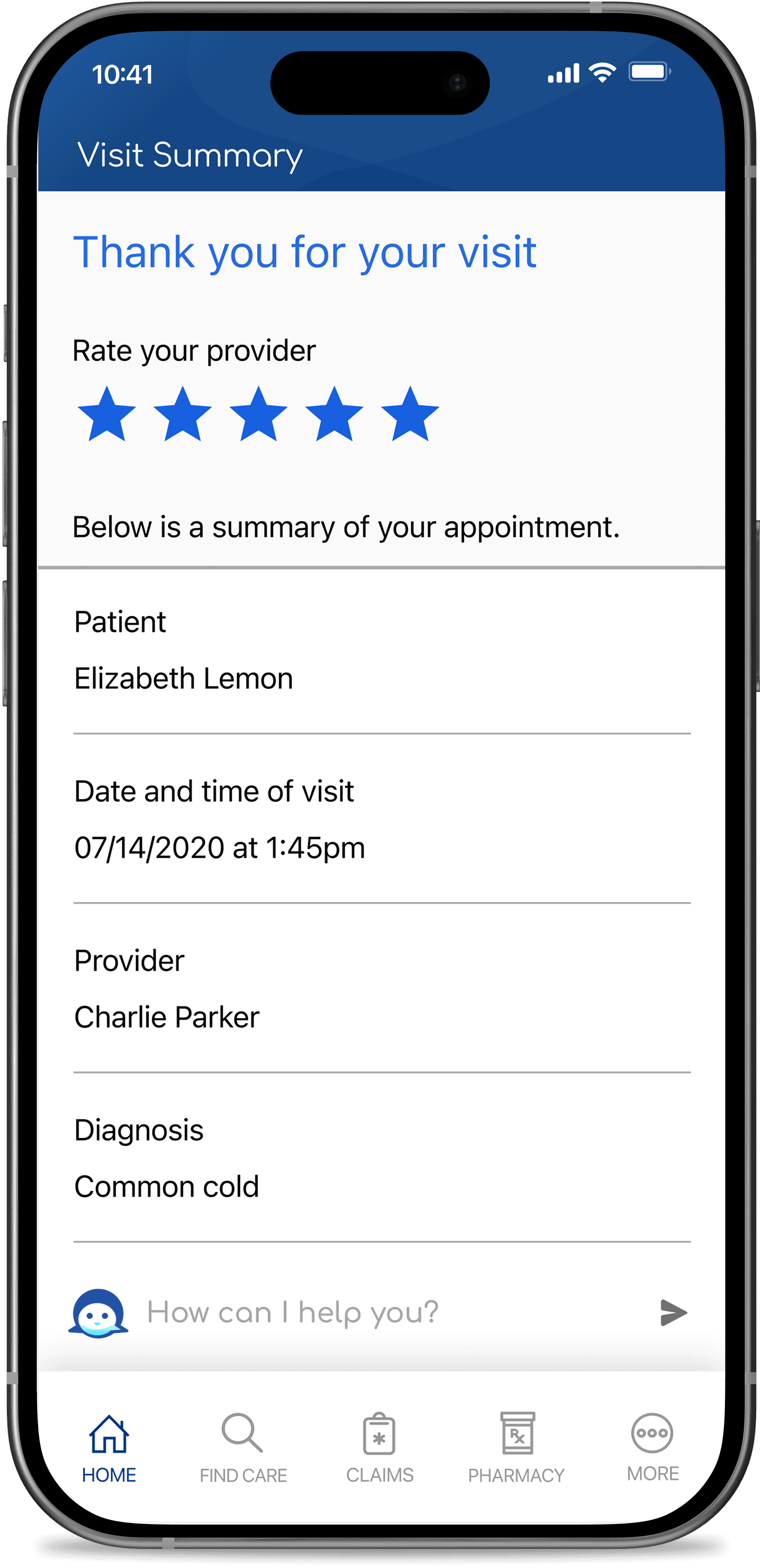
Redesigned screens that address fragmented workflows, simplify navigation, and streamline the steps for members to start a video visit.
Redesigned screens that address fragmented workflows, simplify navigation, and streamline the steps for members to start a video visit.
Approach & Rationale
I redesigned the tele-health experience with three key screens: choosing a physician, viewing physician details, and confirming visit details such as phone number and type of visit. These screens addressed fragmented workflows, simplified navigation, and guided members through each step of starting a video visit. High-use tools like tele-health and provider search were surfaced earlier, and workflows were simplified to reduce steps and cognitive load. Confidence-building features, such as pre-visit technology checks and clearer coverage information, were added to increase trust. Privacy and compliance constraints limited quantitative data, so decisions relied on qualitative research, usability testing, and stakeholder feedback. I prioritized the highest-impact workflows, balanced clarity with necessary information, and ensured patterns could scale safely across devices.
I redesigned the tele-health experience with three key screens: choosing a physician, viewing physician details, and confirming visit details such as phone number and type of visit. These screens addressed fragmented workflows, simplified navigation, and guided members through each step of starting a video visit. High-use tools like tele-health and provider search were surfaced earlier, and workflows were simplified to reduce steps and cognitive load. Confidence-building features, such as pre-visit technology checks and clearer coverage information, were added to increase trust. Privacy and compliance constraints limited quantitative data, so decisions relied on qualitative research, usability testing, and stakeholder feedback. I prioritized the highest-impact workflows, balanced clarity with necessary information, and ensured patterns could scale safely across devices.
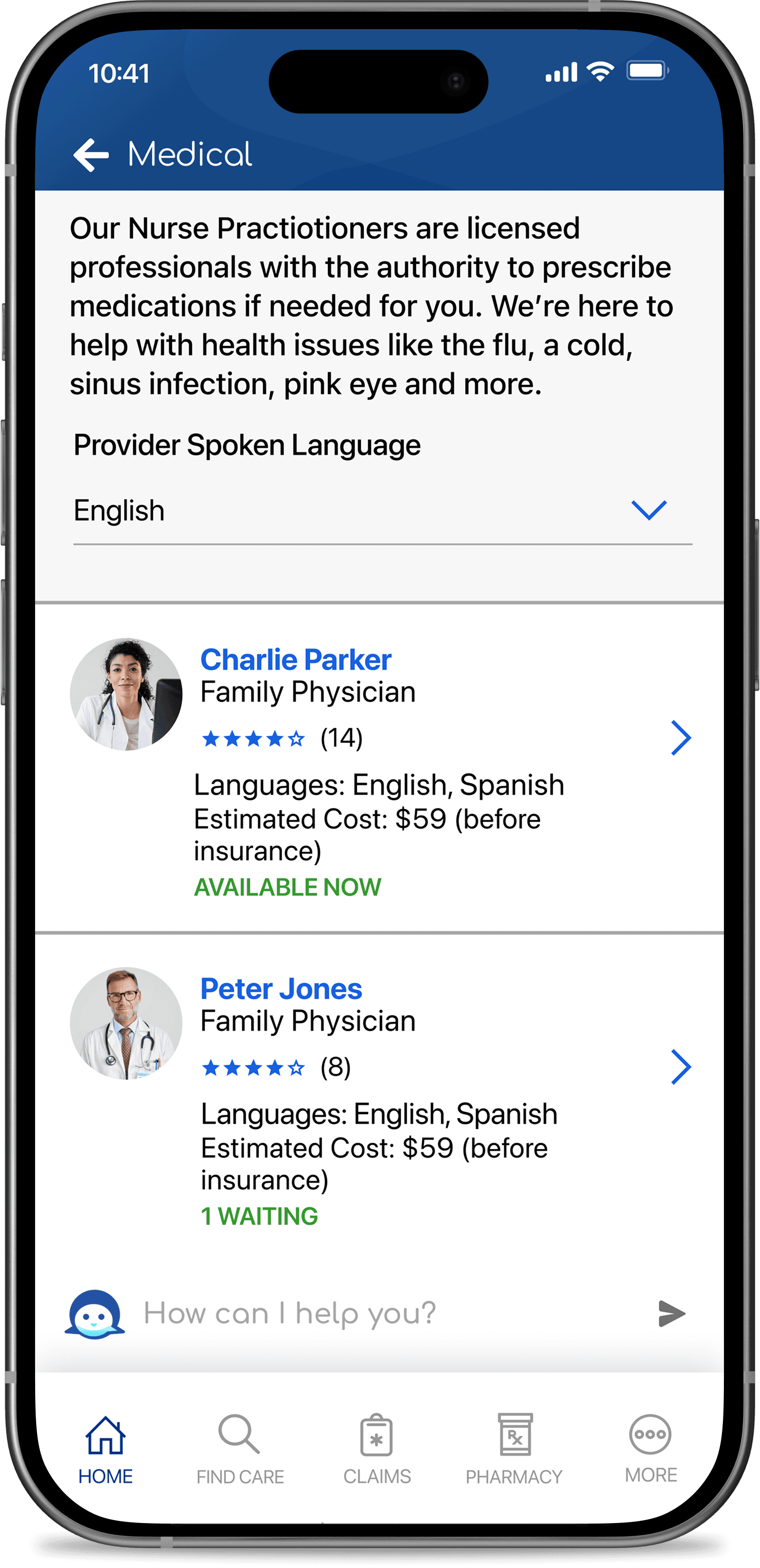
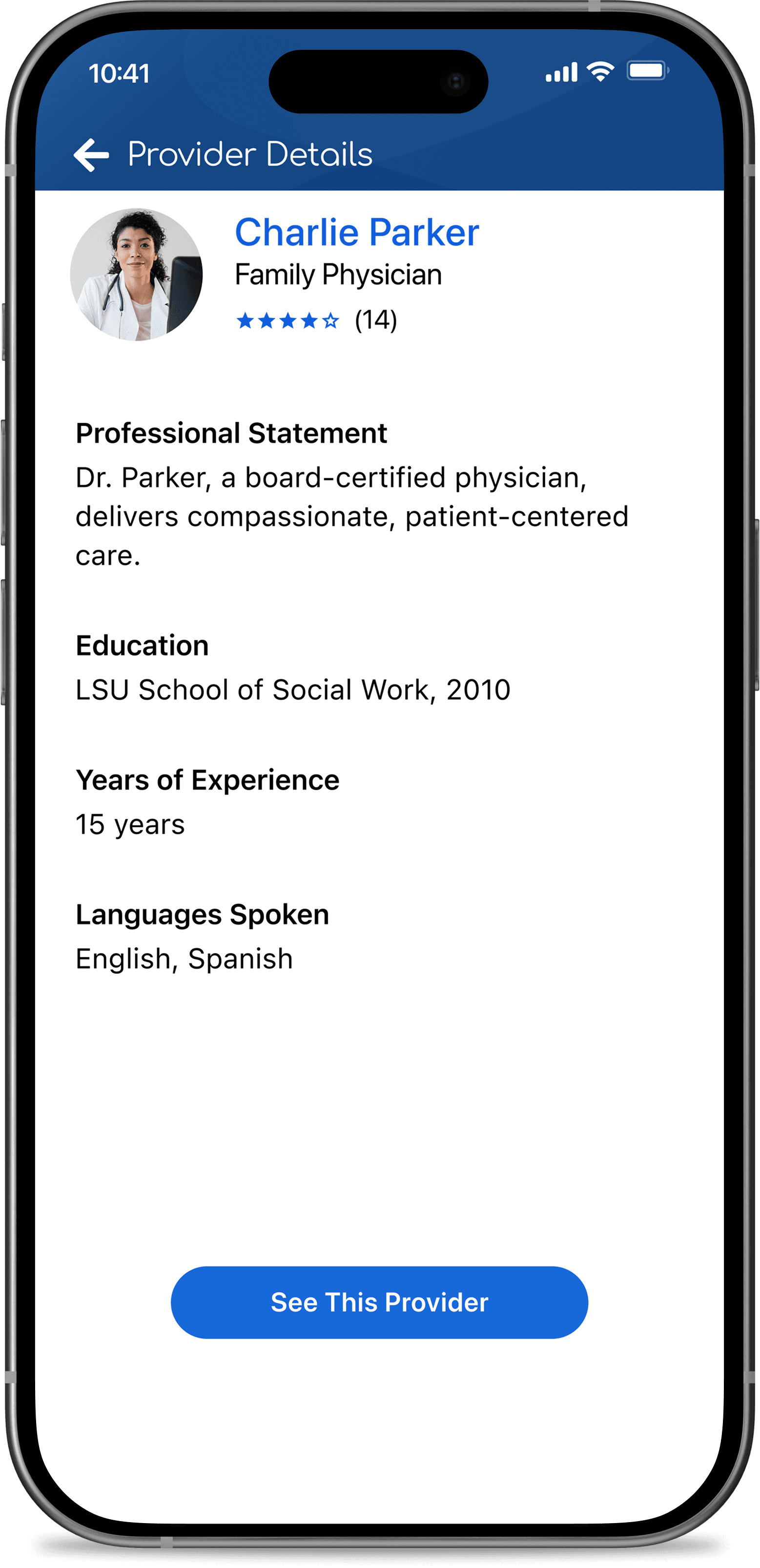
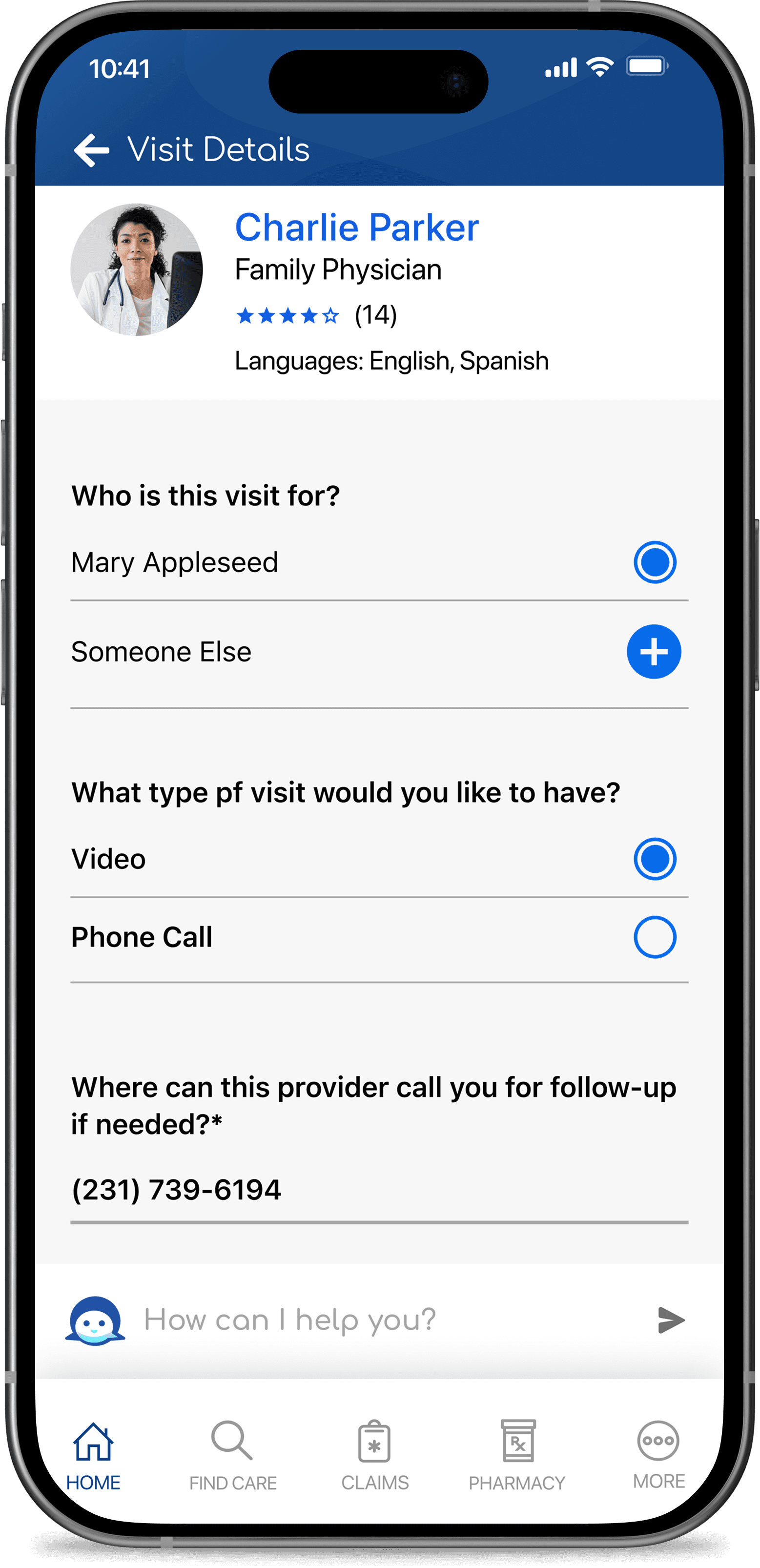
Patient workflow guiding members from provider selection through visit details and available care options.
Patient workflow guiding members from provider selection through visit details and available care options.
Execution & Key Activities
I partnered closely with product, engineering, and support to move quickly while maintaining quality. Using realistic scenarios and dummy accounts, I led user interviews and usability testing to uncover workflow friction under privacy constraints. I shaped and refined solutions through low- and high-fidelity wireframes, clarifying navigation, hierarchy, and decision points, while acknowledging that these screens evolved before the final interactive prototype. Iterative validation of navigation, search, and visit-preparation flows reduced uncertainty and improved member confidence before visits. I also mentored junior designers by reviewing their contributions, sharing design rationale, and guiding them through cross-functional collaboration. Regular stakeholder reviews allowed me to align teams and reduce downstream risk. The mid- and high-fidelity screens illustrate design iterations, and the interactive prototype demonstrates the final patient options flow, guiding members from provider selection through visit details and available care choices.
I partnered closely with product, engineering, and support to move quickly while maintaining quality. Using realistic scenarios and dummy accounts, I led user interviews and usability testing to uncover workflow friction under privacy constraints. I shaped and refined solutions through low- and high-fidelity wireframes, clarifying navigation, hierarchy, and decision points, while acknowledging that these screens evolved before the final interactive prototype. Iterative validation of navigation, search, and visit-preparation flows reduced uncertainty and improved member confidence before visits. I also mentored junior designers by reviewing their contributions, sharing design rationale, and guiding them through cross-functional collaboration. Regular stakeholder reviews allowed me to align teams and reduce downstream risk. The mid- and high-fidelity screens illustrate design iterations, and the interactive prototype demonstrates the final patient options flow, guiding members from provider selection through visit details and available care choices.
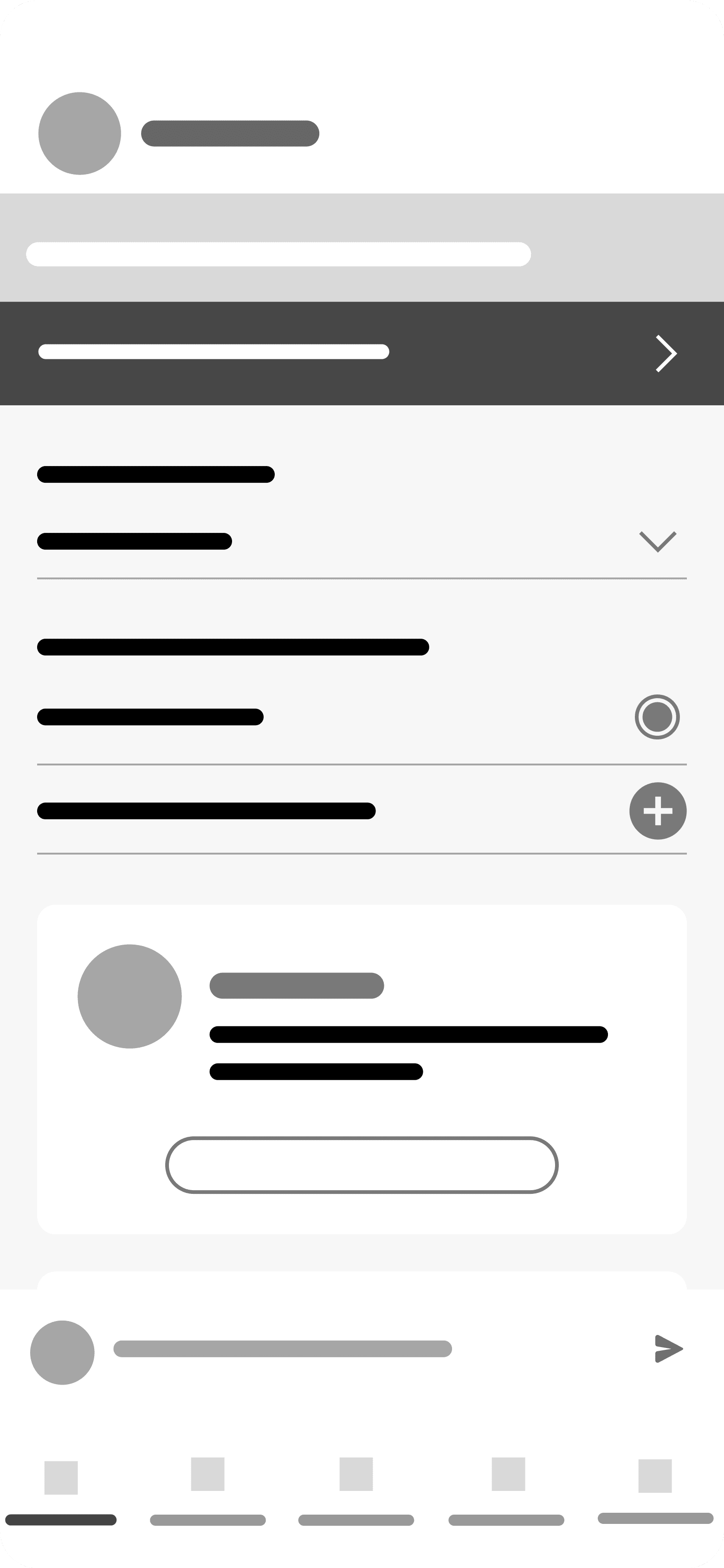
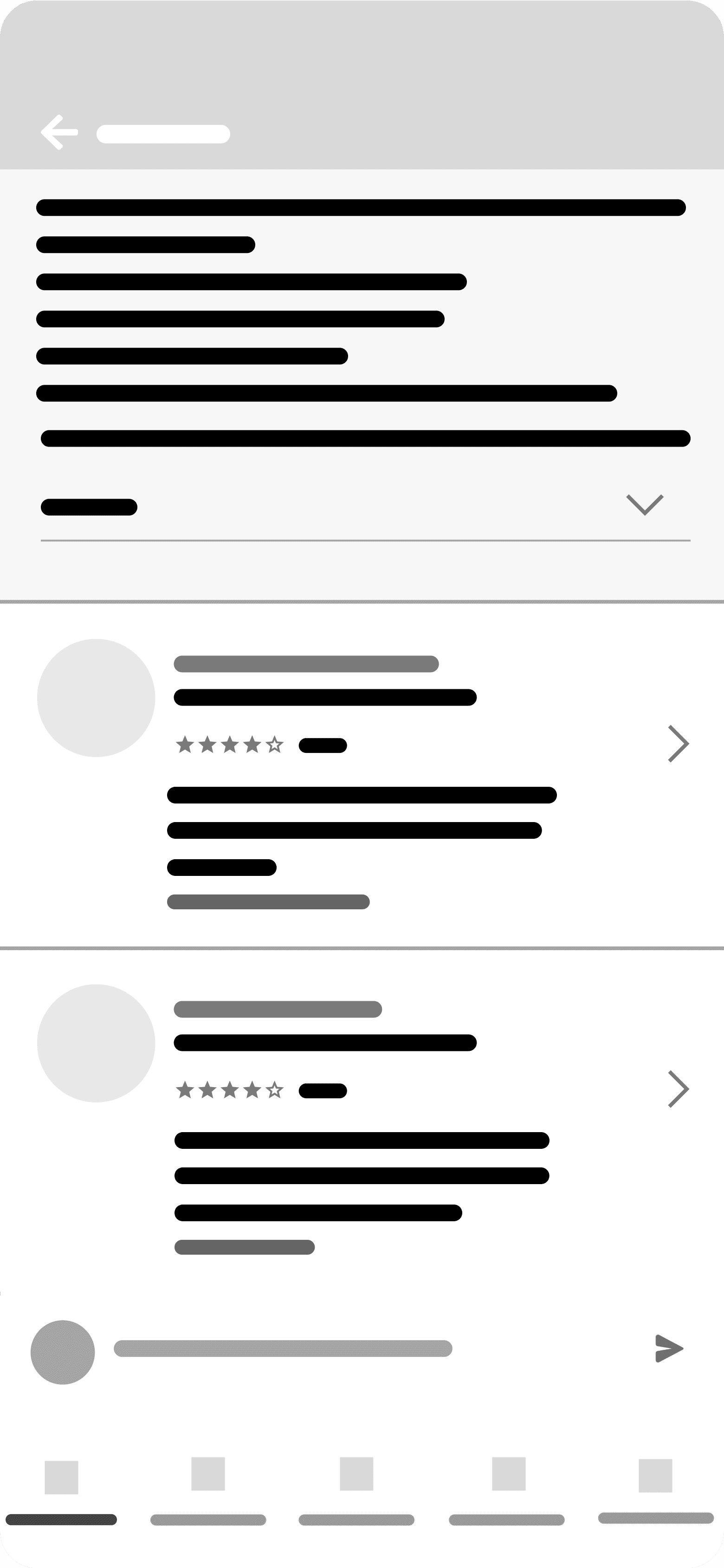
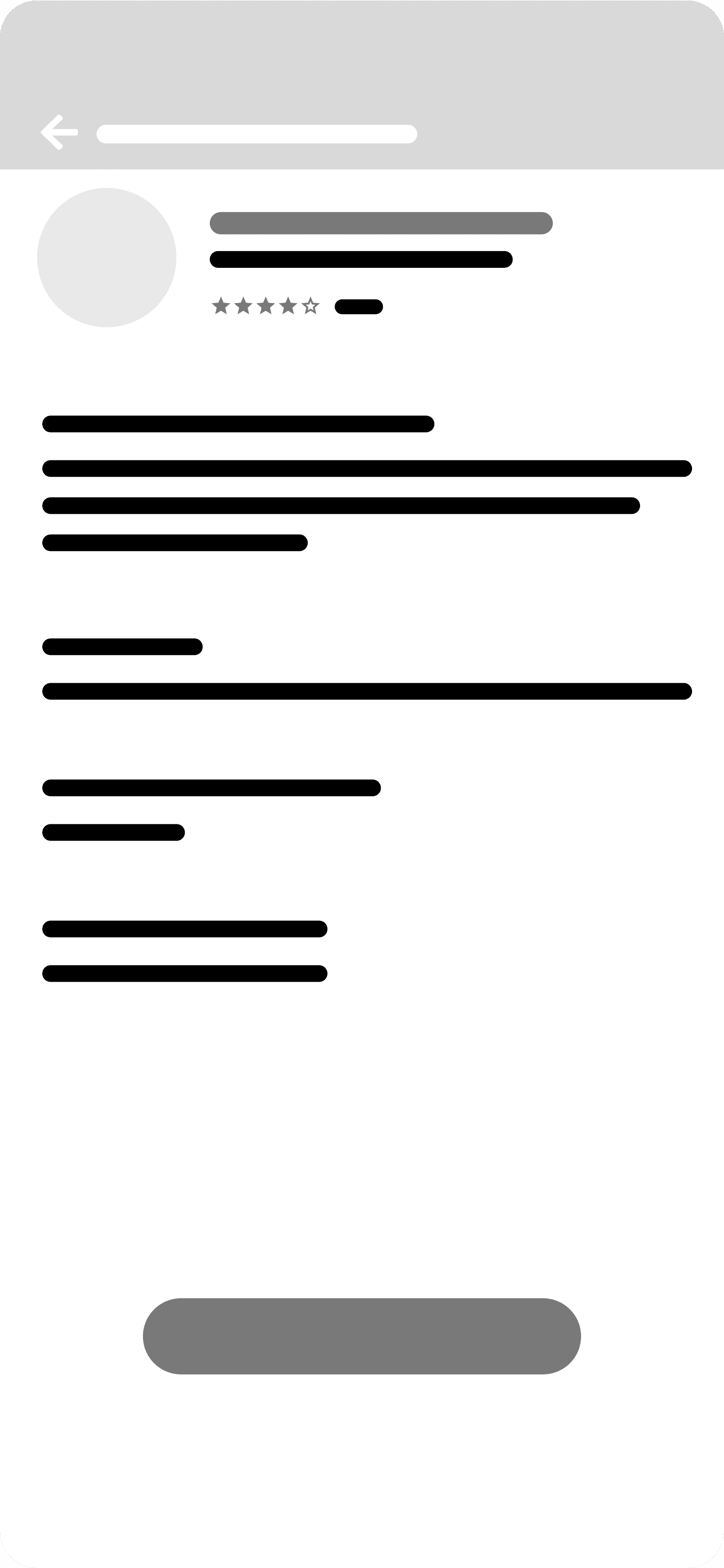
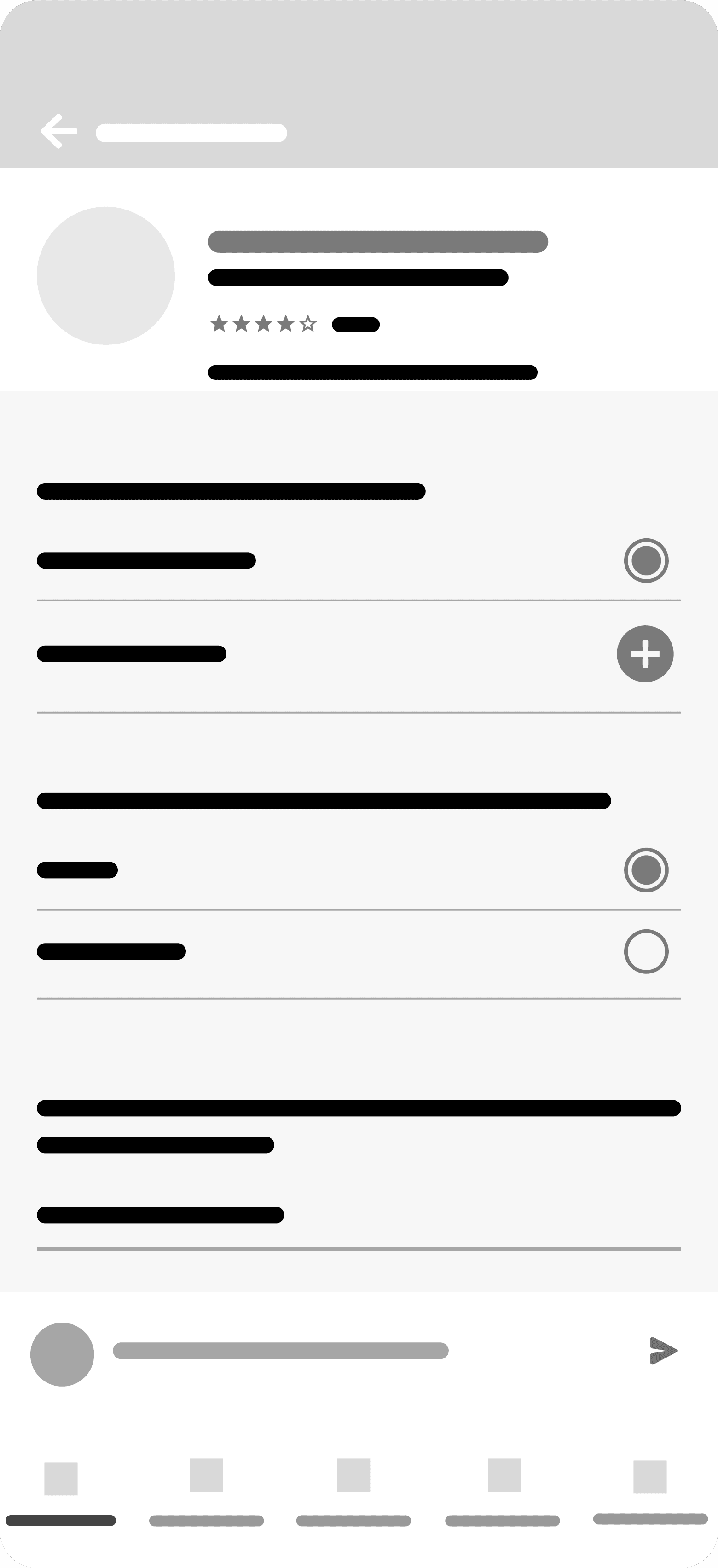
Mid-fidelity wireframes iterated to refine core workflows.
Mid-fidelity wireframes iterated to refine core workflows.
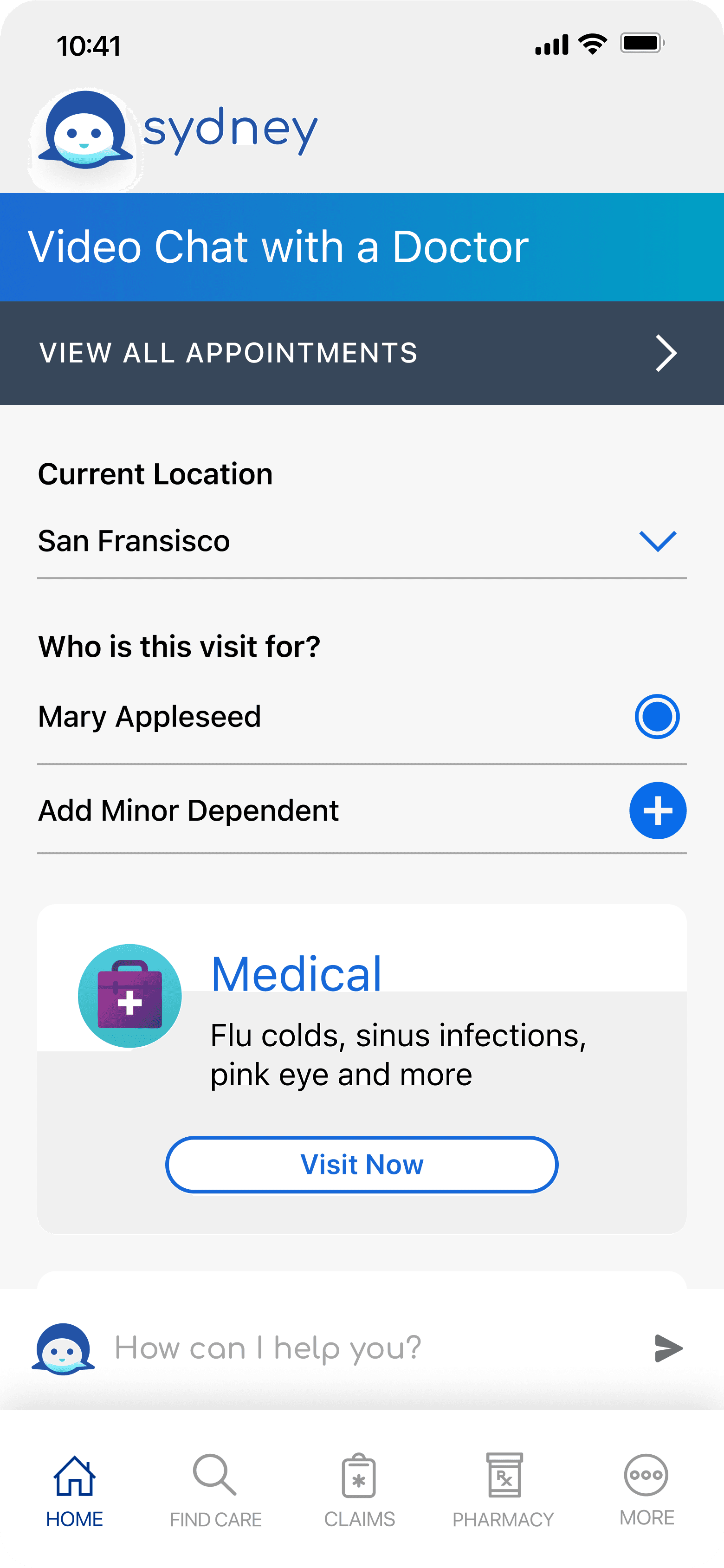
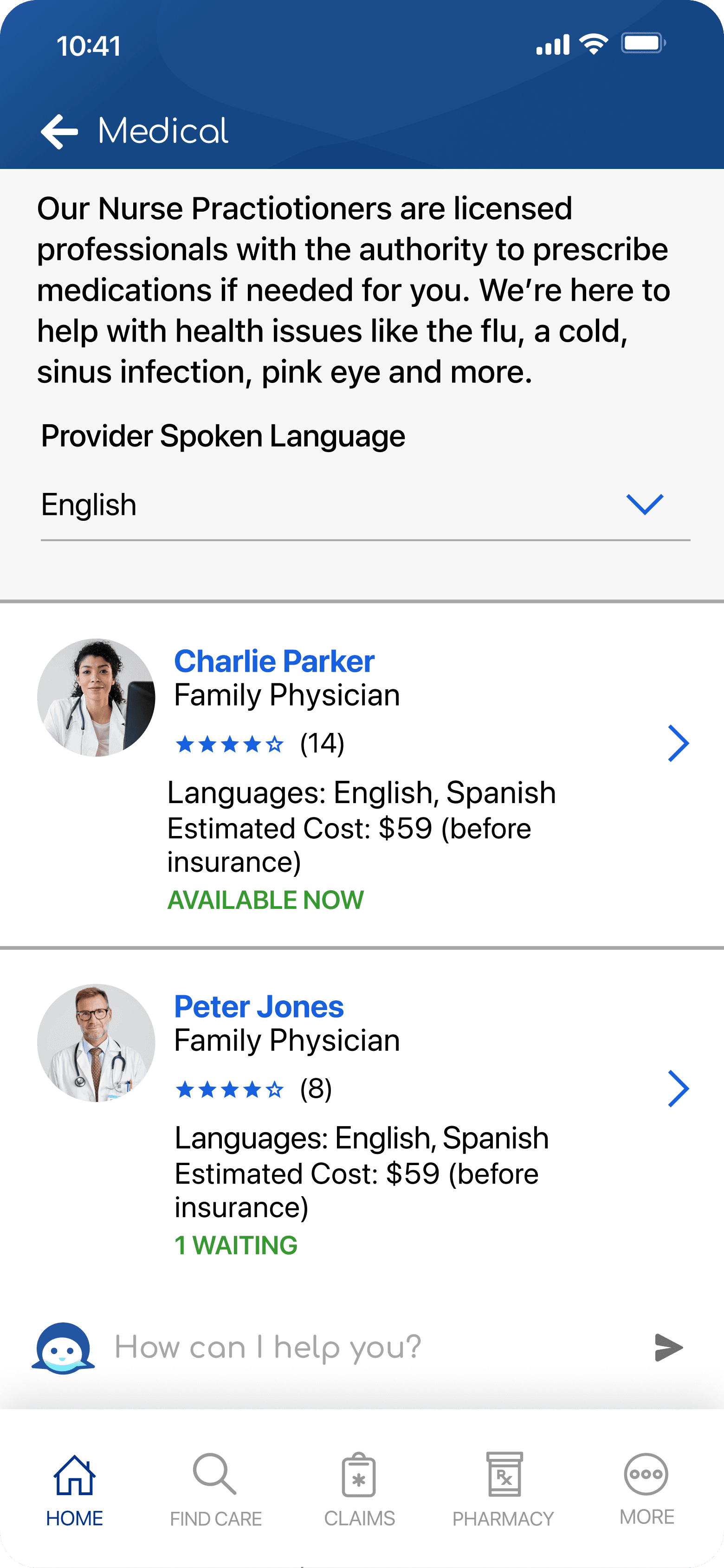
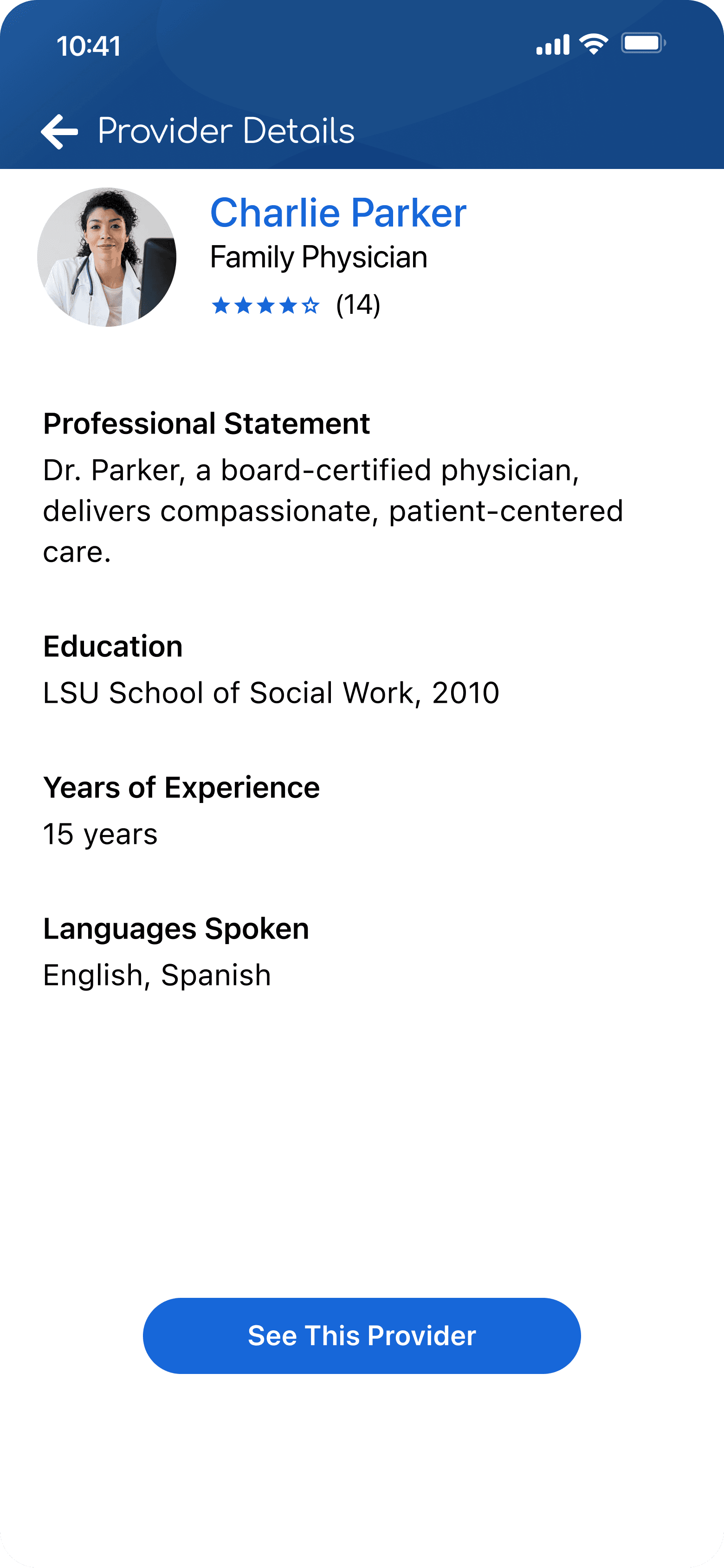
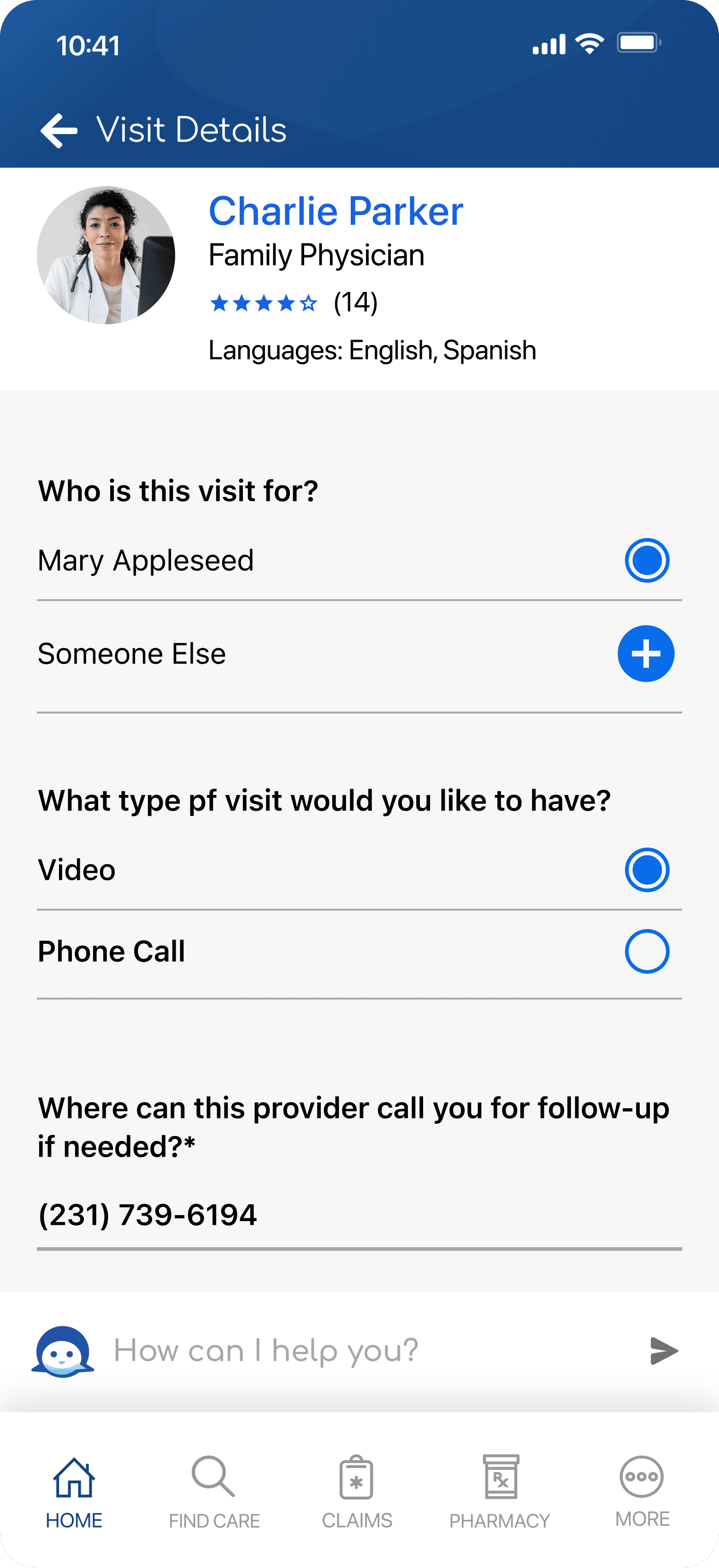
High-fidelity screens demonstrating the final solution.
High-fidelity screens demonstrating the final solution.

Interactive prototype showing the patient options flow from provider selection through visit details and available care choices.
Interactive prototype showing the patient options flow from provider selection through visit details and available care choices.
Impact & Outcomes
The redesigned tele-health experience improved member engagement and confidence by reducing friction and clarifying expectations. Pre-visit technology checks and clear coverage information gave first-time users support and reassured returning users, increasing trust and repeat engagement. Streamlined workflows and clearer instructions lowered tele-health-related support requests, freeing team bandwidth. The project also strengthened team processes, establishing a pattern of rapid iteration, cross-functional testing, and integrating user feedback, and became a model for future user-centered projects. Insights from this work highlighted opportunities for smarter, personalized tools, including AI-driven reminders, guidance, and proactive support. A user feedback card captured key pain points and confirmed that fast, reliable access, clear instructions, simplified navigation, and confidence-building features were driving improved engagement and trust.
The redesigned tele-health experience improved member engagement and confidence by reducing friction and clarifying expectations. Pre-visit technology checks and clear coverage information gave first-time users support and reassured returning users, increasing trust and repeat engagement. Streamlined workflows and clearer instructions lowered tele-health-related support requests, freeing team bandwidth. The project also strengthened team processes, establishing a pattern of rapid iteration, cross-functional testing, and integrating user feedback, and became a model for future user-centered projects. Insights from this work highlighted opportunities for smarter, personalized tools, including AI-driven reminders, guidance, and proactive support. A user feedback card captured key pain points and confirmed that fast, reliable access, clear instructions, simplified navigation, and confidence-building features were driving improved engagement and trust.
User Feedback and Key Pain Points
User Feedback and Key Pain Points
User Feedback and Key Pain Points
Pain Point: Difficulty accessing tele-health quickly
Pain Point: Difficulty accessing tele-health quickly
“I need to feel confident that I can easily access my tele-health appointment at any time, without navigating through a maze of screens.”
“I need to feel confident that I can easily access my tele-health appointment at any time, without navigating through a maze of screens.”
Pain Point: Frustration with poor video quality
Pain Point: Frustration with poor video quality
“I get frustrated when the video quality isn’t clear, or when I face connection issues during the consultation.”
“I get frustrated when the video quality isn’t clear, or when I face connection issues during the consultation.”
Pain Point: Lack of clear preparation instructions
Pain Point: Lack of clear preparation instructions
“It’s important for me to have clear instructions on how to prepare for a video consultation, especially for settings like my camera and microphone.”
“It’s important for me to have clear instructions on how to prepare for a video consultation, especially for settings like my camera and microphone.”
Pain Point: Need for pre-consultation testing
Pain Point: Need for pre-consultation testing
“I’d love to have a feature that lets me test my camera and microphone before the appointment starts so I can make sure everything is working.”
“I’d love to have a feature that lets me test my camera and microphone before the appointment starts so I can make sure everything is working.”
Refelections & Learning
Usability testing and interviews showed that small improvements, such as pre-visit checks, clear coverage information, and simplified entry points, made tele-health feel approachable and trustworthy. These insights guided the next iterations, prioritizing high-impact workflows that reduced friction and increased engagement. The project reinforced the value of user-centered, iterative design in healthcare. Focusing on clarity, simplicity, and trust improved adoption and satisfaction, shaped future design decisions, strengthened collaboration between product, engineering, and support teams, and allowed me to mentor junior designers in applying user-centered methods effectively. It also reinforced that clarity and trust outweigh feature quantity, especially in regulated environments. Designing under constraints sharpened my ability to prioritize, iterate with limited data, and align teams around user outcomes, strengthening my approach to building scalable, confidence-driven product experiences.
Usability testing and interviews showed that small improvements, such as pre-visit checks, clear coverage information, and simplified entry points, made tele-health feel approachable and trustworthy. These insights guided the next iterations, prioritizing high-impact workflows that reduced friction and increased engagement. The project reinforced the value of user-centered, iterative design in healthcare. Focusing on clarity, simplicity, and trust improved adoption and satisfaction, shaped future design decisions, strengthened collaboration between product, engineering, and support teams, and allowed me to mentor junior designers in applying user-centered methods effectively. It also reinforced that clarity and trust outweigh feature quantity, especially in regulated environments. Designing under constraints sharpened my ability to prioritize, iterate with limited data, and align teams around user outcomes, strengthening my approach to building scalable, confidence-driven product experiences.
Usability testing and interviews showed that small improvements, such as pre-visit checks, clear coverage information, and simplified entry points, made tele-health feel approachable and trustworthy. These insights guided the next iterations, prioritizing high-impact workflows that reduced friction and increased engagement. The project reinforced the value of user-centered, iterative design in healthcare. Focusing on clarity, simplicity, and trust improved adoption and satisfaction, shaped future design decisions, strengthened collaboration between product, engineering, and support teams, and allowed me to mentor junior designers in applying user-centered methods effectively. It also reinforced that clarity and trust outweigh feature quantity, especially in regulated environments. Designing under constraints sharpened my ability to prioritize, iterate with limited data, and align teams around user outcomes, strengthening my approach to building scalable, confidence-driven product experiences.
Recognitions & Awards
These awards recognize the impact of our design work elevating usability, accessibility, and the quality of digital healthcare experiences at scale.
Stevie Awards
Stevie Awards
Gold Winner, 2024
Gold Winner, 2024
Silver Winner, 2022
Silver Winner, 2022
Bronze Winner, 2023 & 2021
Bronze Winner, 2023 & 2021
Webby Awards
Webby Awards
Nomines, 2023
Nomines, 2023
Honoree, 2022
Honoree, 2022
Honoree, 2021
Honoree, 2021
Mobile Star Award
Mobile Star Award
Mobile Star Award
Winner, 2022
Winner, 2022
Project Info
Expertise
Expertise
Visual & Interaction Design: Craft intuitive, accessible, and polished interfaces.
Visual & Interaction Design: Craft intuitive, accessible, and polished interfaces.
Visual & Interaction Design: Craft intuitive, accessible, and polished interfaces.
Prototyping & UX Strategy: Iterate rapidly and align design decisions with user insights and business goals.
Prototyping & UX Strategy: Iterate rapidly and align design decisions with user insights and business goals.
Design Systems & Collaboration: Build scalable systems while partnering closely with engineers and stakeholders to deliver high-impact solutions.
Design Systems & Collaboration: Build scalable systems while partnering closely with engineers and stakeholders to deliver high-impact solutions.
Expertise
Visual Design
Interaction Design
Prototyping
UX Strategy
Design Systems
Collaboration with Engineers & Stakeholders
Platforms
iOS
Android
Desktop
More Case Studies
More Case Studies
Explore other projects where I tackle complex problems and deliver human-centered solutions:

Website design & content © 2025 Craig Roby
Website design & content © 2025 Craig Roby
Website design & content © 2025 Craig Roby